
A clear trend has begun to emerge in the six polls published since the formation of the Government of National Unity (GNU) back in June of 2024. The two main opposition parties outside the GNU, the socialist uMkhonto we Sizwe (MK, Left|conservative) and Economic Freedom Fighters (EFF, Left) have self-immolated, failing to capitalise on an increasingly unpopular African National Congress (ANC, centre-left). At the same time, the ANC, which seemingly managed to bounce back in the polls in the early days of the GNU, have fallen to record lows. For the first time in polling history, the ANC fell into second place and have lost support in roughly two-thirds of by-elections they have contested since the 2024 elections.
But perhaps the most talked about and puzzling trend that has emerged in these polls is the success seen by the Democratic Alliance (DA, liberal|centre-right). It has outperformed their 2024 general election result in all six polls.
These gains sit in stark opposition to the widespread predictions made that the DA going into government with the ANC would result in a max exodus of White support, banishing the party to political irrelevance.
So why did the predicted DA collapse never materialise? Are these post-GNU polling gains a temporary bump, or something that can be carried into next year’s local elections? And how has the party managed to advance while rivals across the political spectrum continue to lose ground?
To answer these questions, we must first have a solid grasp of the perceptions of the DA amongst voters before the 2024 elections. What were its key strengths and weaknesses?
Understanding the electoral character of the Democratic Alliance
Few parties have experienced such rapid growth as the DA in the democratic history of South Africa. When it first contested a democratic election in 1994, it only achieved 1.7% of the vote. But in only a few elections, that figure rose to 20%, becoming the Official Opposition, controlling multiple municipalities and even leading the third largest province in South Africa (the Western Cape).
This was a result of 3 key strengths:
1. Effective Governance
The first strength was that the DA was widely viewed as the party of competent management, capable of running local governments effectively and ensuring high-quality service delivery. Repeated polling showed that the DA-governed Western Cape was regarded as the best-run province in the country. Word-association polling also consistently linked the DA with clean governance in the minds of voters. Through its administration of the Western Cape and several municipalities, the party has built a strong reputation among key segments of the electorate for efficient, honest governance, especially when compared to the ANC’s perceived incompetent and corrupt mismanagement.
South African President and leader of the ANC, Cyril Ramaphosa, himself has stated that ANC run municipalities are often the worst, whereas DA run ones are by comparison more effectively managed.
In a recent party conference he declared: “I can name it here because there’s nothing wrong with competition. They [the more effectively run local governments] are often DA-controlled municipalities. We need to ask ourselves. What is it that they are doing that is better than what we are doing?…And there’s nothing wrong with us saying we want to go and see what Cape Town [DA-run] is doing. We want to go and see what Stellenbosch [DA-run] is doing.”
2. Clean and corrupt-free
While being totally free of corruption in South Africa is a seemingly impossible task, the DA has gained a reputation for being far less corrupt than its opponents. In 2019 they polled as the party most associated with providing clean governance (32.7%) and accountability (33.8%).
They have been frequrntly in the news for their high profile legal battles with the ANC and Jacob Zuma relating to numerous corruption scandals. The DA has claimed victory in the courts on several occasions, such as when they forced the ANC to disclose internal Cadre Deployment Committee records to the public and stopped the government from funding Zuma’s private legal fees related to the long-running arms deal case.
3. A moderate electorate
This point is the most misunderstood one for people outside of South Africa and thus deserves the longest explanation. There is a perception of the Black electorate that given South Africa’s history, voters would be highly sympathetic to more radical economic beliefs and that this explains why the vast majority of them do not vote for the capitalist DA. For many, the success of the EFF and MK party is confirmation of this belief. However, understanding voters in this way is short sighted. Anyone who has spoken to voters while on the doorstep or in day to day conversations knows that someone believing in a set of policies doesn’t necessarily paint the full picture of how they will vote.
Moreover, this ignores the large constituency of Black voters who hold relatively moderate economic positions, and overstates the divide between Black and minority votes on key wedge issues. Several polls show that even within the ANC, there is about 30-40% of voters who are particularly open to moderate ideas.
The SRF has done the most comprehensive issue based polling which can prove particularly illuminating.
1. Expropriation
2. Wage controls
3. Foreign Policy
4. Tax and Spending
5. Impact of the National Health Insurance Draft Bill on the ANC’s support
The key takeaways from these polls are
- Black voters may lean more populist and left-wing on many economic issues
- But they do not lean significantly more left wing or populist
- In every poll, a large share of Black voters open to moderate ideas, sitting typically around the 30-45% range
A full list of issue polls which include a breakdown by party support and education can be founded on the SRF website here.
This moderate liberal constituency of Black voters who oppose large scale government regulation in the economy and turned away from the ANC over the National Health Insurance bill is largely urban, young and aspirant or middle class.
The DA is not necessarily fighting as steep of an uphill battle as one might originally assume in attempting to win widespread support on a moderate capitalist platform.
So, the DA is perceived as effective, less corrupt and runs on policies that many voters would be willing to support, so why have they been stuck in second place so long?Especially when the ANC is so unpopular with the electorate.
The DA has suffered from several big image problems, the first is the big White elephant in the room.
1. A Racist Image
The DA is an overwhelmingly minority party. In 2024 only 24% of its votes came from Black South Africans and most of its senior figures are White. The party has been perceived by much of the electorate as too pale, too out of touch, and too inconsiderate to the needs and experiences of Black voters to affect positive change.
When it has campaigned on a tough on crime and corruption platform, it has been accused of dog whistling to fears of the “Black Peril”, associating Black people with violence and disorder.
The DA has only had one Black leader in its history, Mmusi Maimane. His election campaign in 2019 still haunts much of the party. Under his leadership, the party failed to make the inroads with Black voters that the liberal establishment hoped a Black leader from a humble background could. Instead, the big story of the election was that many White Afrikaans voters left the DA for the conservative VF+ (right-wing).
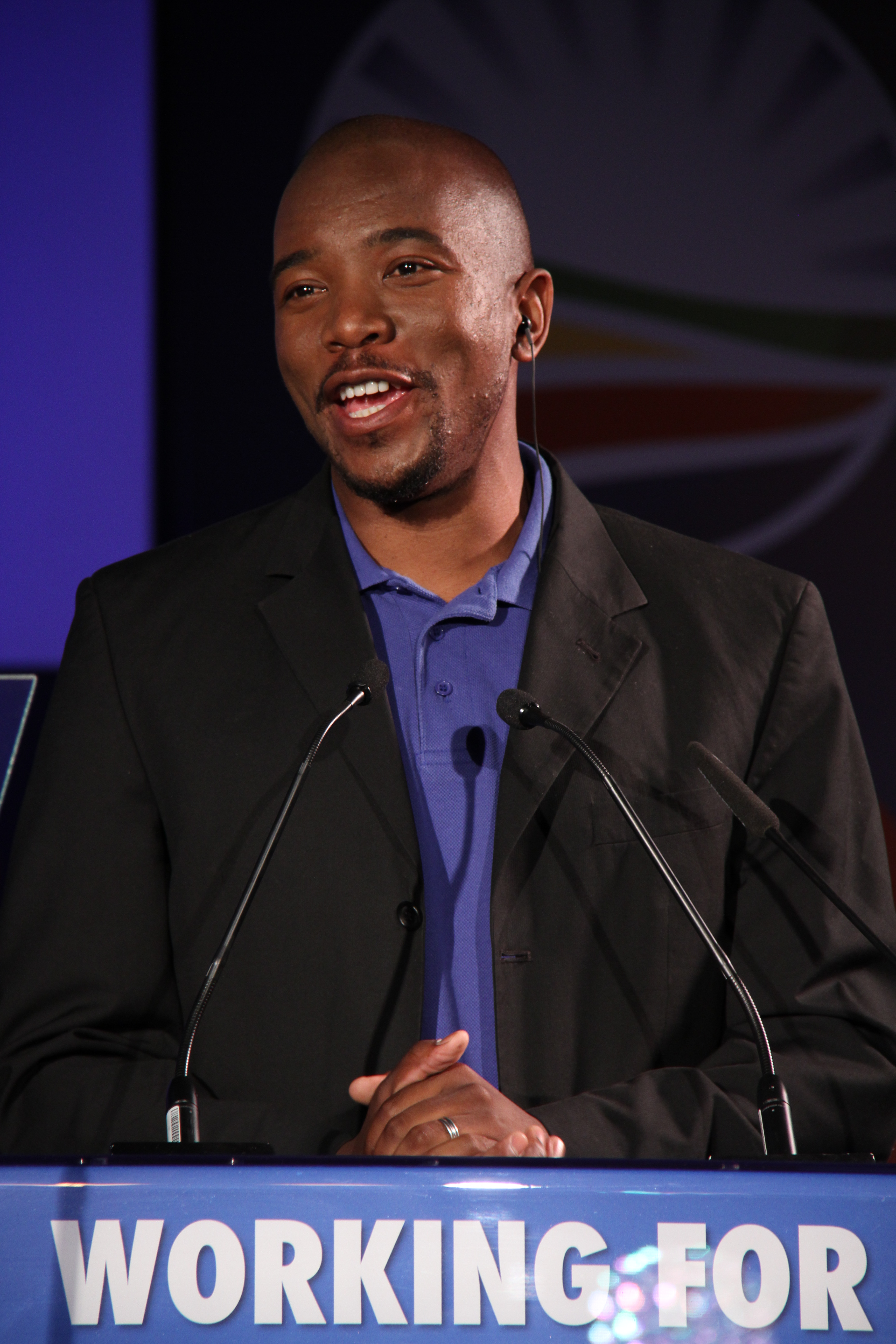
When he resigned from the party after this result, he said in a press conference:
Part of the DA’s image problem is a result of the controversial statements made by one of its most prominent politicians, Helen Zille. Numerous tweets from her have landed her in hot water and damaged the brand of the DA with Black voters.
Some tweets from her include stating that there were more racist laws in South Africa in 2020 than there were before Apartheid and one which read:
This tweet in particular caused so much anger she faced disciplinary hearings within the DA and was forced to publically apologise.

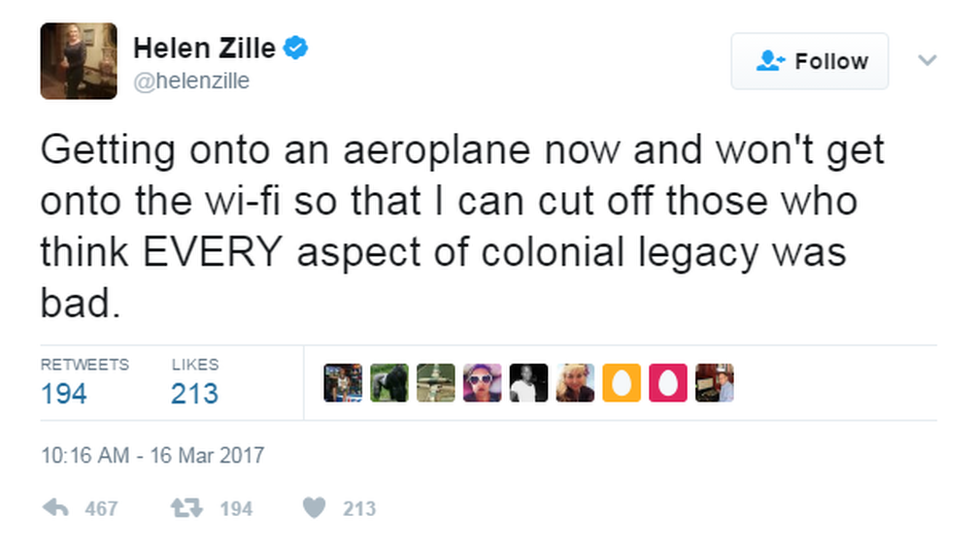
Despite these controversies, she remains one of the most senior figures in the party and is the DA’s official candidate for the mayor of Johannesburg in the 2026 Municipal elections.
Perhaps no data reveals the true extent of the DA’s image problem more than a poll from the SRF that found that over 50% of Black voters strongly or somewhat agreed with the statement that the “DA will bring back apartheid.”
This White/minority image problem can go a long way to explaining why in 2024 they got the same share of Black voters as they did in 2019 (4.4%). People may believe the DA delivers for Whites, but ignores the plight and struggles of Black Africans in the townships, who still live in misery and poverty.
When over 75% of voters in 2024 were Black, this lack of support presents the largest systemic issue for the party.
2. Fear of the unknown
The second reason why the DA has failed to make inroads historically is the great degree of anxiety about what a post-ANC country would look like.
About half of South Africans have only ever lived under ANC rule, the other half remembers life in one of the most oppressive, violent and aggressive countries on earth. This country was the one that pioneered the technique of waterboarding, instituted draconian restrictions on free speech, invaded multiple countries, supported several coups abroad and had one of the most traumatic police state systems ever invented.
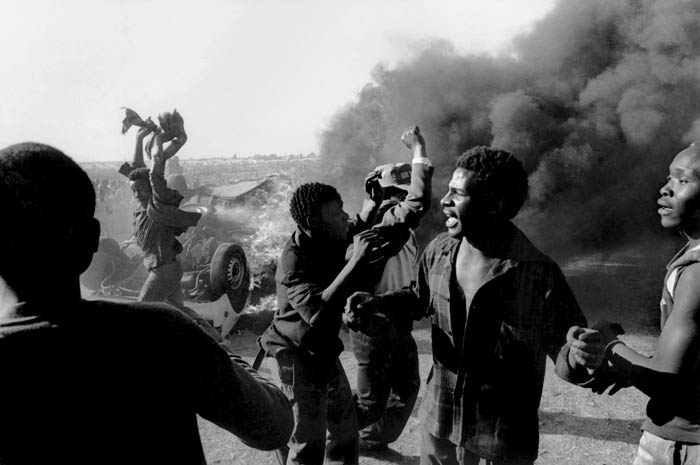
The past has given many voters an understandable angst about what life outside the ANC could look like. For many, the ANC, while flawed, is a great alternative to Apartheid rule and when other liberation movements have fallen into even greater economic decline and dictatorships, such as neighbouring Zimbabwe, many are hesitant to endorse alternatives.
Poll after poll has demonstrated that while voters see the ANC as a party of steady decline, many (especially before the GNU) prefer it to potential unsteady chaos.
The Impact of the GNU
Now with this background established, we can better understand why we did not see the much-predicated crash in the polls for the DA.
Several polls of the broader South African voters and public create a clear picture. DA voters were more than happy for the party to work with the ANC if they could gain concessions from them and keep out the “doomsday scenario” of the EFF and MK being in government, who are much more radical than the ANC.
Coalitions as a concept have continued to be generally popular. This explains why there was no instant collapse in DA support, as no evidence suggested that DA voters would see any coalition as a great betrayal.
Across every major demographic group an ANC-DA coalition is the favoured governing choice. Support for the GNU and coalition politics have held strong, even with anger at the direction of the country. But while this explains why there was no sharp fall in the polls for the DA, it does not explain why the DA have experienced a post-GNU bounce.
So far, the GNU has proven effective at alleviating many of the DA’s big image issues. Since the ANC is now no longer the sole ruler of South Africa, and must share power with several other parties, its given confidence to voters that the ANC can be abandoned for good. The GNU has shown voters that they do not need to be afraid of another large party taking the reins of government. The sky has not fallen, democracy has not been destroyed, and the world is not exploding now the DA occupy several senior positions in government.
The DA being able to promote some of their senior Black politicians to key government positions, as well as work with a Black liberation party almost certainly has helped improve their image with Black voters. Now voters have seen that the DA has not “brought back apartheid,” much of their understandable ease has been addressed.
The GNU also places the DA in a position to combat the ANC in a much more influential and constructive manner. Instead of pushing for change from the opposition benches, they can do so from the centre of political power. The DA has also had some high-profile fights with the ANC in the GNU and on several occasions managed to come out on top.
The most notable instance of this was when the DA opposed the ANC’s planned VAT increase in the 2025 budget . When the proposal was shot down, Helen Zille heralded it as a victory for the party and coalition politics. The backlash from this VAT debacle is what led to the DA for the first and only time in polling history being recorded as the largest party in South Africa.

The GNU has been effectively leveraged by the DA to soften their image with voters and shine a light on their opposition to the most politically damaging decisions of the ANC.
Winning by Default
But while the DA is enjoying polling success, it has only been possible through its political opposition being in a state of chaos and disarray.
The ANC has failed to fight off corruption allegations. With the latest scandal seeing many in the party accused of colluding with assassins to murder local politicians by KZN Police Commissioner Nhlanhla Mkhwanazi. Local governance in many urban areas is still shambolic. Water shortages have become part of daily life in Johannesburg and public buildings and infrastructure is in a state of near endless decay.
Moreover, the public image of Cyril Ramaphosa is not what it once was. In 2019, his approval rating reached a high of 68%, whereas in the lead up to last year’s elections, it fell to 40.7%. While he has seemingly improved his approvals since, it is unlikely he will ever top his 2019 levels of support. Cyril Ramaphosa as a brand polls much better than the ANC. We know this from scenario polling that showed a collapse in ANC support if he was replaced.

He has kept them above water and is their biggest electoral asset, especially when the possible successors like Paul Mashatile are deeply unpopular. With his numbers looking shaky, the ANC falls with him and with Ramaphosa reaching his two term limit in 2029, the party will understandably be feeling anxious about the future.
The MK party has arguably fared even worse. The party has been in what feels like a never-ending civil war. The former party general secretary, Floyd Shivambu, who left the EFF to join MK, quickly left them also to form his own political party, the Afrika Mayibuye Movement (left-wing). This came after he had a high-profile clash about his handling of the party finances with Duduzile Zuma-Sambudla, the controversial daughter of the party leader Jacob Zuma. Supporters of Duduzile Zuma argued that Shivambu imposed unfair austerity measures on staff and engaged in serious corruption, purchasing “luxury cars, five-star hotels and penthouses.” On the other hand, Shivambu allies believe he was attacked for simply attempting to get the party finances under control, with Duduzile jealous of his growing influence in the party.
Zuma-Sambudla herself has been unable to escape trouble, bouncing between scandals for the past few years including legal battles over terrorism charges. However, her most recent controversy, being accused of illegally trafficking South Africans to fight for Russia against their will has seen the most pushback. As a result, she has resigned as an MP for the MK party as a police investigation is underway into the matter and her potential culpability.
Her father, Jacob Zuma, the official leader of the party, is scantily in the public eye. At the age of 83 with a documented history of health problems, serious questions around his capacity to lead as well as publicly campaign in the leadup to the local elections suffocate the party. If Zuma cannot be an active leader of the party and travel up and down all nine of the provinces MK is contesting in, their capacity to build on their successful 2024 campaign is put into serious jeopardy.

The EFF has also slid further in the polls. Of the six published post-election polls, 5 of them show the EFF doing worse than in 2024. The only time they have shown potential growth was after the ANC’s disastrous VAT debacle. Even then, the EFF only sat at 10.2%, still below the 10.8% they received in 2019.
Multiple factors are responsible for this. Firstly, the party has been plagued by infighting from the very bottom to the very top of the party, coupled with an exodus of important talent and members. This exodus consists most notably of Floyd Shivambu and Mbuyiseni Ndlozi, the second and third most senior leaders in the party.

Julius Malema, the leader of the party is seen by many voters as a man who is running out of steam. He has been the longest serving leader of the major parties in South Africa (12 years) and has further consolidated the party’s power and decision-making bodies with him alone, isolating much of the membership.
Malema himself has been in court over gun charges relating to him firing a semi-automatic rifle into the air during a party celebration rally in 2018. This has led to him being convicted of five offences, including the illegal possession of a firearm and ammunition, illegally firing a weapon in public, and reckless endangerment.
The EFF has also been dogged by a banking fraud corruption scandal. In 2018, VBS Mutual Bank was declared insolvent and bankrupt, with the SARB finding evidence of wide scale looting, fraud and corruption, with taxpayers and citizens defrauded out of roughly R2 Billion.
An SARB report found that R16,000,000 was illegally funnelled to Brian Shivambu (the brother of Floyd Shivambu), who has denied any allegations of wrongdoing and was defended by Julius Malema. Then in 2023, it was revealed Floyd Shivambu, while deputy leader of the EFF, had also received money through illegal bank transfers. It remains unclear where this money has gone, where it was spent, and how much Malema knew about it, with an affidavit from the former chair of VBS bank describing how he paid money to Floyd Shivambu and Julius Malema. Moreover, SARS last year-initiated liquidation proceedings against Brian Shivambu’s two companies, which he allegedly used as a front to funnel these fraudulent bank funds to his brother and Malema.
But now that Shivambu and Malema are in separate parties and no longer comrades, they have gone from denying all wrongdoing to shifting blame on to the other person, still giving no clear answers about where the money came from, how it was spent and where it is now.
While it’s unclear what really happened, this slow drip of corruption related scandals has undoubtedly bruised and bloodied the party’s brand. With the questions still left unanswered only prolonging the time the story remains in the public consciousness.
A lot of time to Fail
But while these are hopeful signs for the DA, they should caution being too optimistic.
Previous polling trends show the DA does best in between elections and then falls off as the election draws closer. We are already in the party’s typical season of electoral highs; it thus makes sense they would do better now and so analysts should be hesitant in assuming this high will continue.
Moreover, while it holds strong with White and Indian voters and are seemingly making gains with Black voters, the party seems to be struggling with Coloured voters.
Coloureds are a distinct racial group who are people of mixed ancestry. Their cultural and ethnic identity being created through hundreds of years of complex intermixing of peoples and languages from across the world. They number over 5 million in South Africa and are roughly 8-9% of South Africa’s population and have historically been the racial group most flexibile in their voting behaviour.
The Patriotic Alliance (PA, right-wing), a Coloured-interests party has performed particularly well in recent by-elections, taking votes largely from the ANC and DA.
While the DA grew in 2024, it fell with Coloured communities, particularly in rural areas. This explains why in the Western Cape, the province with the most Coloured voters and a traditional DA stronghold, the party’s support actually fell by 0.1%. The PA has used immigration as an effective wedge issue to split the DA from many of its Coloured supporters and has attacked them for abandoning Coloured communities. This is a powerful message for a marginalised community who now see the DA focused on national politics, away from the local left behind communities in the rural Western Cape.
Coloured voting patterns
Coloured voting patterns in Cape Town vs outside of Cape Town
More recently, serious allegations around John Steenhusien have emerged relating to credit card misuse. As leader of the DA, John Steenhuisen received a default judgment granted against him in the Cape Town Magistrates court over a failure to pay personal credit card debt of nearly $9000.
Alongside this, allegations emerged that the DA federal finance committee removed his party credit card early this year due possible missuse on personal purchases like UberEats.
While the investigation is still ongoing, and falling into credit card debt is not a criminal offence, it’s a damaging PR nightmare that could spiral if not addressed or if more sinister details emerge. It raises questions about Steenhuisen’s responsibility, decision making, and personal character. Will voters trust a man who has such serious financial problems to lead a major party and government department?
Closing thoughts
Fully predicting trends is always impossible, particularly in South Africa, a country with especially bizarre and erratic news cycles. However, the polling has demonstrated several key patterns which should give the DA a sense of unique optimism before the local elections, especially if its gains with Black voters hold.
While the DA platform is not bullet- proof, it is going into the local elections facing opponents who are tired, dogged by multiple scandals and are running out of steam, having to run on election issues like accountability and clean governance which the DA shines in. But can the DA run the tight ship needed to capitalise on this? Only time will tell.