
This article of part of an Africa Elects’ series for the 2026 Moroccan election, written by Tidjani Saleh
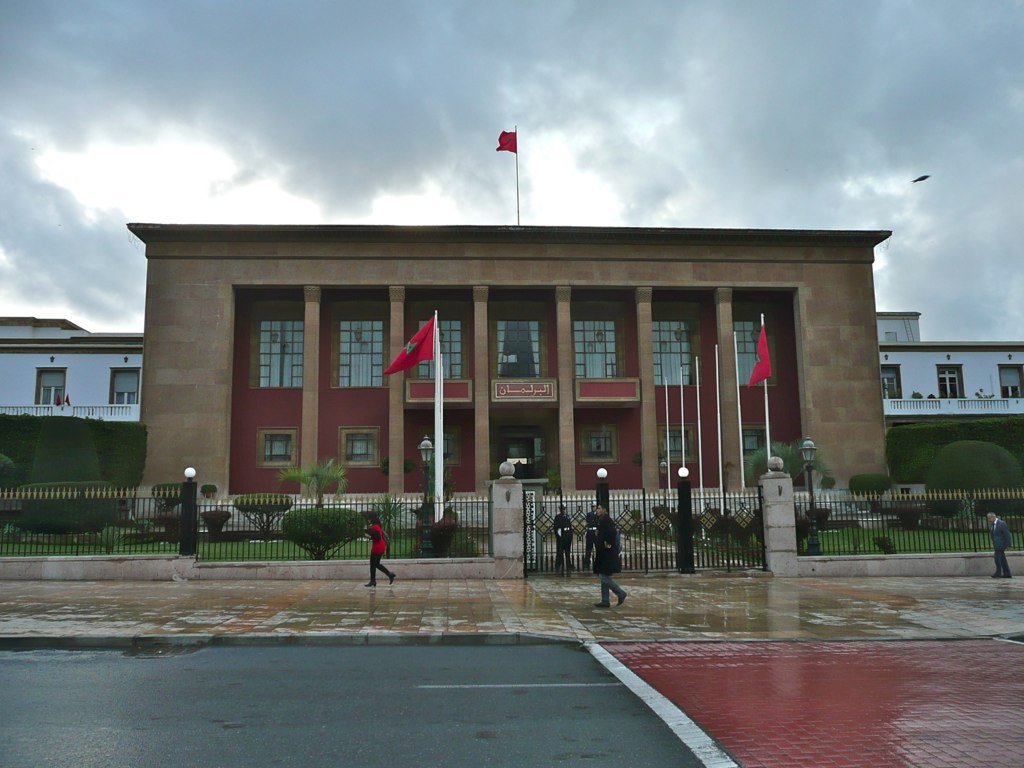
15,801,162 Moroccans are called to cast their vote on 23 September to elect the 395 deputies of the House of Representatives, the lower and dominant chamber of the Parliament of the Kingdom of Morocco. This is the sixth legislative election under the reign of King Mohammed VI (*), and the fourth under the 2011 Constitution.
The House of Representatives is elected by proportional representation across two lists. 305 seats come from 92 local constituencies with two to six seats each, while 90 come from twelve regional constituencies where all seats are reserved for women. It is also important to mention that, since 2021, the divisor in Morocco’s proportional system is based on the number of registered voters and not the number of total votes cast. This leads to seats being distributed almost by how a party was ranked. For example: if a constituency has six seats, it will almost likely give a seat to the six best performing parties. This makes coalition governments the rule in Morocco due to the fragmented nature of the resulting party system.
The House of Representatives has had since the 2011 Constitution a real legislative and institutional role affecting the daily lives of Moroccans. However, the chamber must share power with the monarchy, with a constitutional arrangement described as a semi-constitutional or executive monarchy. Article 47 of the Constitution requires the King to appoint the Head of Government from the party that wins the most seats; with the King then appointing the rest of the cabinet on the recommendation of the Head of Government.
However, Article 42 names the King the “supreme representative and symbol of the unity of the Nation”, the “guarantor of its unity” and “territorial integrity in its authentic borders”, and the “supreme arbiter” between institution. The 2011 Constitution did hand the Head of Government more powers such as the right to dissolve parliament, while the King retained power on sovereign domains: religion, defence and foreign policy. This leads to the King effectively being on top of the government, which runs day-to-day business.
Perhaps nowhere has that hierarchy been clearer than in the Kingdom’s relationship with Israel. The 2020 normalisation was presented to the public as a royal initiative as part of the Abraham Accords and in exchange of an American (and later Israeli) recognition—a first—to Morocco’s occupation of Western Sahara. This normalisation was realised under the government of former Head of Government Saadeddine Othmani (PJD, Islamist), who had to distance himself from the normalisation due to his party’s base being hostile towards any relationship with Israel. This has also resurfaced this month, after a US-brokered trilateral meeting led to Morocco and Israel establishing embassies. The Justice and Development Party (PJD) reaffirmed its opposition but also instructed its militants to stop discussing the story publicly and focus instead on other topics. This example shows the limits the governments of Morocco face when it comes to the sovereign domains, and how parties chose to not get involved on those sensible topics.
Another structural factor in Moroccan elections is floor-crossing. Article 61 of the 2011 Constitution automatically strips any deputy of their seat if they renounce to their party affiliation mid-legislature, a measure that has been enforced several times since. Article 90 of the organic law governing the House of Representatives also adds another limitation, with deputies wishing to run for a different party at the next election having to formally resign their current seat first. This leads to a wave of resignations on the weeks before an election as politicians formalise their party switch. This is especially relevant for voters in more personalist constituencies, where the name of the candidate matters more than the party. This leads to the Moroccan party system being quite fluid and full of changes, although most parties maintain a certain core based on ideological orientation and closeness to the Makhzen—the influential royal entourage that has a final say on almost every political decision in Morocco.
Morocco’s elections thus remain important and influential on the Kingdom’s political system, with them providing more legitimacy to the executive monarchy system, influencing the direction of day-to-day governance, redirecting citizens’ demands into a more controlled political arena, and helping political parties gain leverage and influence. Nonetheless, the power of the 395 deputies is limited by a system which has a clear boundary none dare to cross: religion, security, foreign policy, the monarchy, and sovereignty over Western Sahara.
“Allah, al-Watan, al-Malik” (God, Fatherland, King) are fixed points of the system, and elections determine the variables that can move inside an established framework that no vote is capable of changing.