
This article of part of an Africa Elects’ series for the 2026 Moroccan election, written by Tidjani Saleh
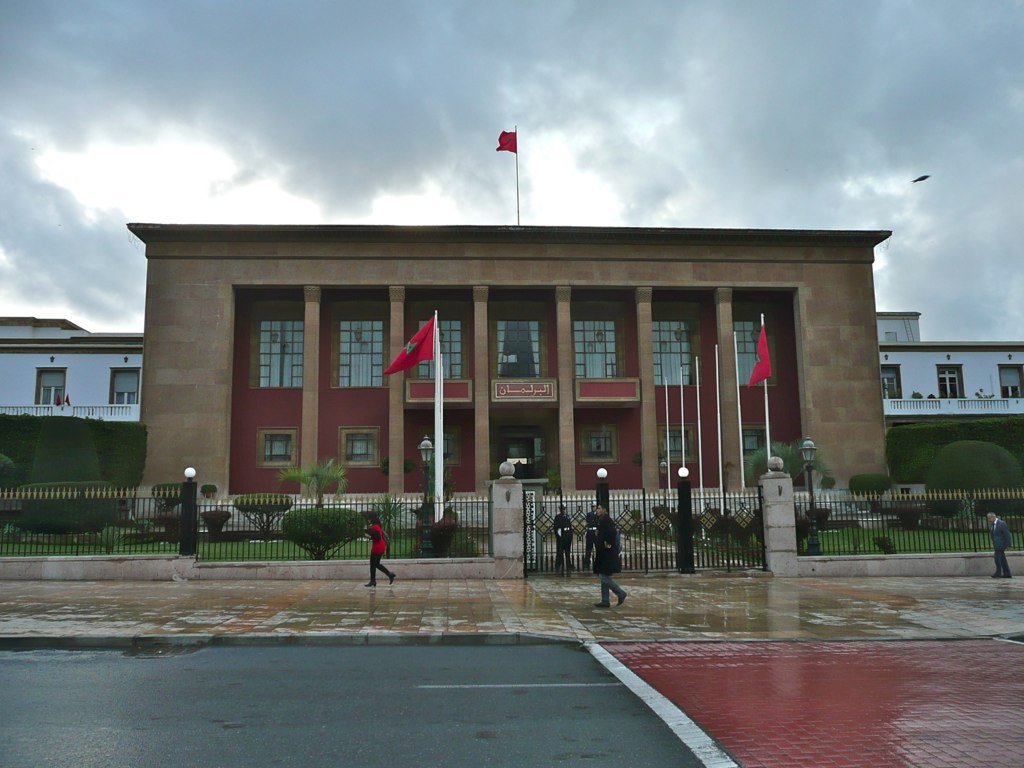
Twenty-eight parties are contesting this year’s election in Morocco. The governing coalition is running with a senior party in decline, and junior partners aiming to take over the first position. The opposition is split on at least three mutually hostile lanes. GenZ212, the youth movement behind protests last autumn is meanwhile not endorsing any lane. Everything is up for grabs in this election, palace excluded.
The National Rally of Independents (RNI, centre-right), currently the largest party in the House of Representatives, is contesting this election with a new, unknown leader. The current Head of Government Aziz Akhannouch announced on January that he would not seek a third term as RNI’s leader nor run for a seat in the House of Representatives. While he said that the decision was „personal“ and „carefully considered“, it’s no secret that Akhannouch’s reputation is not helping his party’s chances. Akhannouch has faced opposition campaigns as early as 2022, such as the #Dégage_Akhannouch, („Leave, Akhannouch“ in French) boycott campaign against companies owned by the Head of Government—one of Morocco’s richest men—, who has had his government being perceived as at the service of markets he is a major participant at. His replacement is Mohamed Chaouki, the outgoing parliamentary group leader, whose election in February is seen as damage control as the party campaigns on defending its government record.
The two stars of this election are clearly the Party of Authenticity and Modernity (PAM, centre) and the Independence Party (Istiqlal, conservative), both being the junior partners of the current government. One of them is most likely to finish first, thus claiming the position of Head of Government under Article 47 of the Constitution.
PAM’s bid is built around their leader Fatima Ezzahra El Mansouri, current mayor of Marrakech and Minister of National Planning, Urban Planning, Housing and Urban Policy. If elected she could become Morocco’s first female head of government, although the party has not discarded nominating the popular president of the Royal Moroccan Football Federation and current deputy minister in charge of Budget Fouzi Lekjaa as their Head of Government. The party has mostly run on affordability and economic growth.
On Istiqlal’s side, party leader Nizar Baraka is campaigning on a sovereignty and development programme, with proposals such as strategic reserves of fuel, food, and medicine; and most importantly—implementing the proposed Moroccan autonomy plan for occupied Western Sahara, one of the party’s feuds.
The discontented opposition vote is meanwhile most likely redirected to three incompatible parties. The Justice and Development Party (PJD, Islamist), led by former Head of Government Abdelilah Benkirane, is running to recover much of the votes lost in the 2021 election on a conservative and identity agenda while try to catch all votes possible from the youth’s dissatisfaction. The Party of Progress and Socialism (PPS, left-wing) under Nabil Benabdallah meanwhile has drifted towards a more Makhzen-tolerant, reformist-from-within position. The party failed to form a left-wing union with the Socialist Union of Popular Forces (USFP, centre-left) or the parties comprising the Left Alliance (AG, left-wing).
The Left Alliance, composed of the democratic socialist Federation of the Democratic Left (FGD, left-wing) and the left-nationalist and populist Unified Socialist Party (PSU, left-wing), runs the most radical opposition programme. The alliance proposes a constitutional reform towards a parliamentary monarchy and is campaigning heavily on the cost of living. It’s also the only party actively condemning the monarchy’s decision to normalise diplomatic relations with Israel. AG is nonetheless starting from a smaller base of just two seats elected by both parties separately in 2021, but it’s expected to get a modest increase in its seat share.
USFP on the other hand is potentially facing its worst result ever, down from its historical role of leading the Moroccan left. Party leader Driss Lachgar has extraordinarily extended his term twice beyond a two-term limit despite challenges that have disengaged the party’s traditional base, most notably in 2022 by the more left-leaning Sahrawi former deputy Hasna Abouzaid. The party may still hope for a role as a junior coalition partner, with the party already ruling out a coalition with PJD.
The more mid-sized and rural-oriented Constitutional Union (UC, liberal) and Popular Movement (MP, liberal) are also hoping to be decisive in coalition making, although a higher turnout may make their chances more difficult. Both parties are leaning on their entrenched local networks, with UC also absorbing defectors instead of losing them.
The Marxist-Leninist and republican Democratic Workers Way (Annahj Addimocrati, left-wing) has continued on its historical position of refusing to contest Moroccan elections by actively campaigning on an election boycott, leading to widespread local media coverage and the arrest of several militants in Kénitra and the Rabat suburb of Salé.
The GenZ212 protests, fed by anger over World Cup spending instead of public services after maternal deaths at an Agadir hospital, can claim every party focusing healthcare, employment and anti-corruption as their legacy: turning long-running grievances into core election issues. Turnout is also something parties are paying attention to, with parties explicitly warning of „falling into the Algerian voting pattern“. Only 19% of registered voters are under the age of 35, with youth apathy being another obstacle for GenZ212’s #FreeKoulchi (Free everyone/everything in Darija, the vernacular Arabic spoken in Morocco) campaign.
Koulchi, everything, from the first woman to head the government to a reconfigured opposition, is on play for an election that seems to lead to a serious reconfiguration of the party system in Morocco.. Everything except the Palace.