
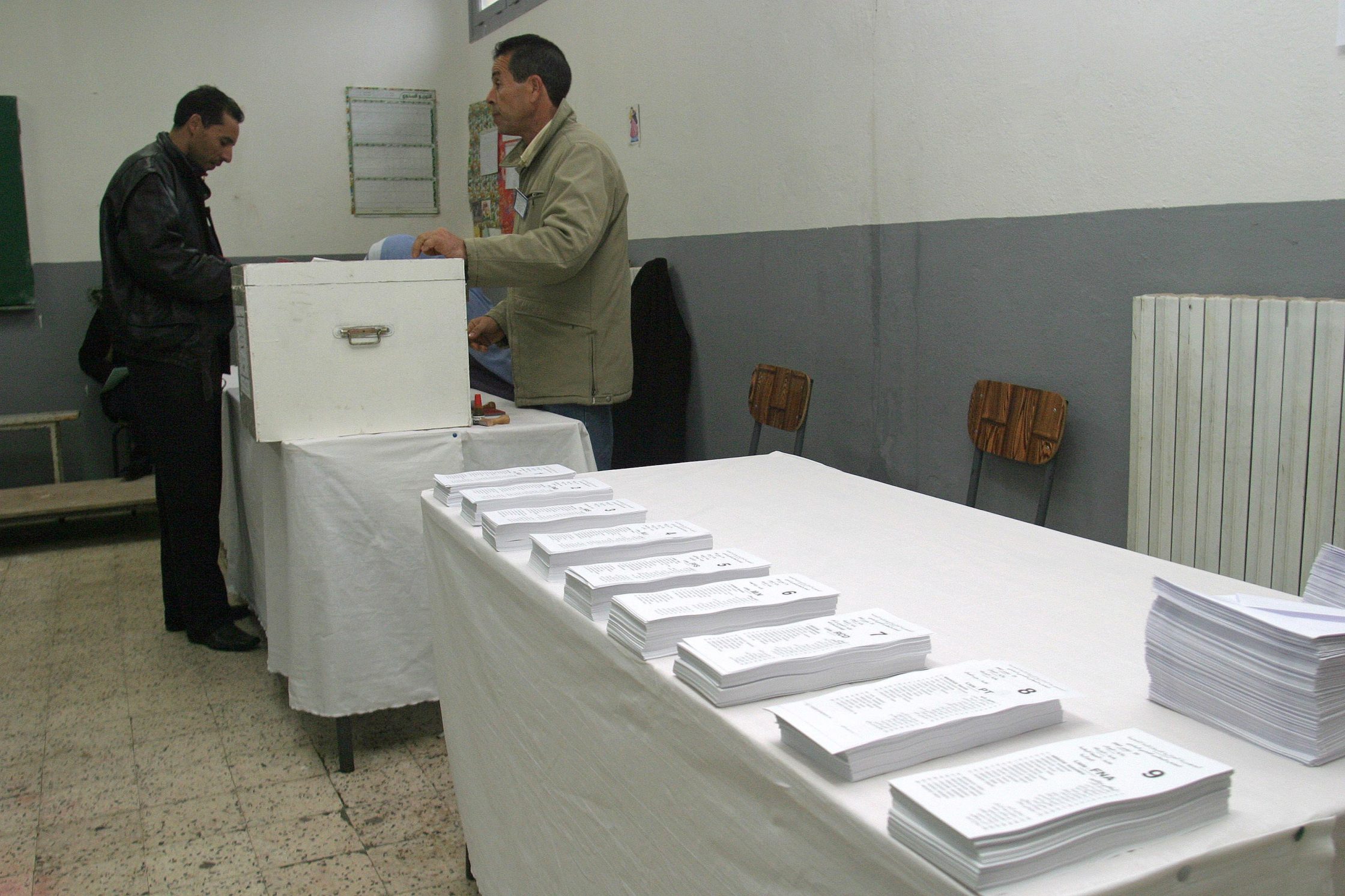
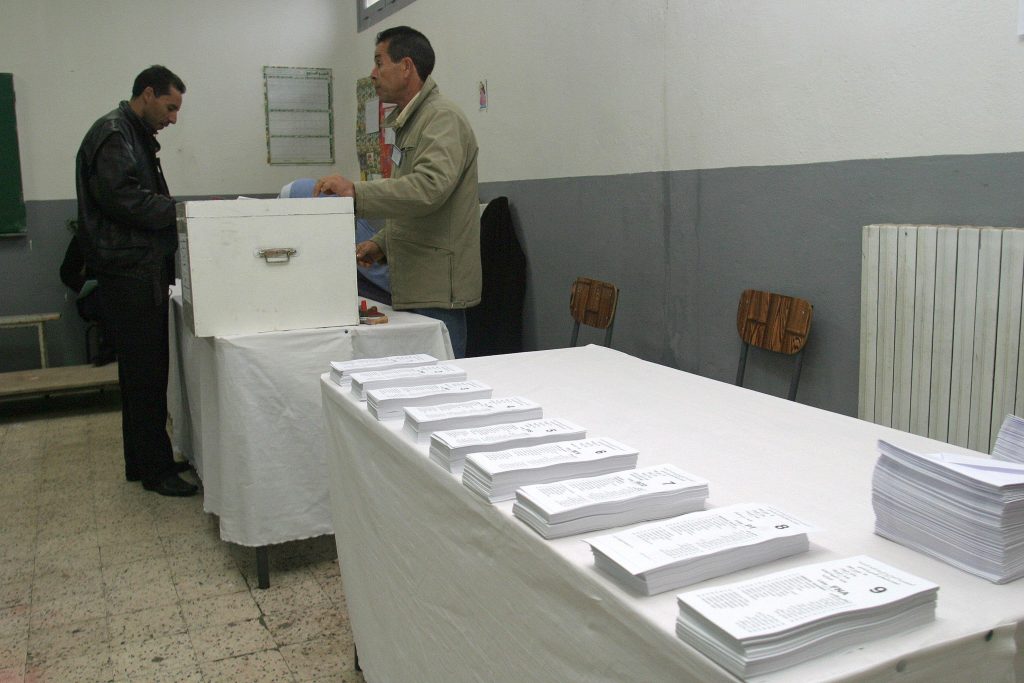
Algerians head to the polls on 2 July 2026 to elect 407 members of the People’s National Assembly, the lower house of Parliament. Most of the 24 million Algerians registered to vote, however, remain apathetic to politics in the country after the 2019 Hirak protests failed to translate into significant democratic advances, even with the reluctant participation of the opposition in this election. The main mission for the ruling party is thus not to gain a majority, but to see an increase in turnout that may provide legitimacy to the state institutions.
Algerian politics have been dominated by what is popularly known as “le Pouvoir“ (the Power), which refers to the informal network of senior military officers, intelligence chiefs and regime-aligned business elites that has effectively been in power since Algeria’s independence. This network shapes political outcomes largely from behind the scenes, regardless of the president in charge. President Abdelmajid Tebboune (independent) himself is seen as a symbol of this network, governing as a civilian figurehead sustained by le Pouvoir rather than truly independently leading the country.
Algerian elections are thus seen as a managed competition. The National Liberation Front (FLN, centre-left) that led the independence movement has largely remained in power since independence, with the introduction of multi-party elections leading it to later forming coalition governments — mostly with the Democratic National Rally (RND, centre-right) with which it dominated the political system.
The 2021 elections after the 2019 Hirak protests led to both FLN and RND losing their parliamentary majority under a historically low turnout and an opposition boycott, with independent lists becoming the second largest force in the People’s National Assembly. The election saw the Movement of Society for Peace (MSP, Islamist) remaining as the largest opposition party, with other parties of a mostly nationalist, conservative or Islamist orientation completing the parliament. These parties have to operate inside the system, sometimes even joining the cabinet, while defending their own agendas.
The opposition parties that boycotted the 2021 election will also participate this time, in a move celebrated by the government as proof of the broadening political landscape and a source of legitimacy for the regime. However, it is fairly ignored that their return has been mostly forced by a new party law that threatens parties that fail to participate in two consecutive elections with their legal dissolution. Another significant change for this election is the significant reduction of powers of the Independent National Elections Authority (ANIE), which has seen its status as an independent electoral commission diminished with a transfer of the organisation of elections to the Ministry of Interior after a constitutional reform.
Opposition parties are already facing significant hurdles: 61 lists have been barred from participating, mostly affecting opposition parties. This has been done through Article 200 of the new electoral law, which has been strictly applied by ANIE. The article bans candidates “known to the public for their links with dubious business circles and their influence, direct or indirect, on the free choice of voters and the smooth running of the vote”, which many parties have protested and denounced an arbitrary application. Lawyers have questioned the article itself due to its ambiguity, considering it may contravene constitutional guarantees.
The other challenge for the returning opposition parties has been acquiring enough signatures to register their lists, with parties blaming low turnout in part. Despite the recent expansion of the number of Algerian regions to 69 and the enlargement of diaspora constituencies to 11, parties like PT (left-wing), FFS (centre-left|Amazigh) or RCD (liberal|Amazigh) have only managed to present 29, 27 and 8 lists respectively, which will further complicate their chances of building a genuine opposition bloc in the People’s National Assembly.

The parties forming the Algerian government have stated that their main goal this election is to increase political participation. After the historical low 23% turnout of 2021, any number lower than that would be a significant blow to the government’s best hopes of renewed legitimacy as the representation of national sovereignty. The government has highlighted the constitutional and law reforms in their campaign to increase turnout, together with the return of the opposition. However, very little indicates that the post-Hirak young Algerian society seems particularly interested in participating as they see little chances for genuine change from the current government.
Women’s representation remains a structural weakness in this election. Despite representing half of the candidates in 2021, only 8% of the elected deputies were women. The female candidacy quota has been reformed for this election to a third, which may lower female representation even further, as most parties rarely field women on top of their electoral lists. Only 21% of the candidates presented across all lists are women.
Despite everything, this election remains significant to Algeria. The government of Abdelmajid Tebboune wants to send a signal of stability and democratic normalcy to the world, especially as Algeria strengthens ties to a Europe dependant on Algerian gas after Russia’s invasion of Ukraine. The election will also help to see on whether the post-Hirak movement has any viable chances of seeing itself represented in the People’s National Assembly.
Turnout and the combined seat result of FLN and RND will be important data to keep an eye on, but the seat share of the returning opposition will be even more important. Them barely or even failing to enter the People’s National Assembly would make it difficult to rebut the argument that their reticent participation is mostly in the interest of the regime.